Curious whether a duplex, triplex, or fourplex could be your first step into real estate investing in Des Moines? You are not alone. For many buyers, small multifamily offers a practical way to lower housing costs, build experience, and start creating long-term wealth without jumping straight into a large apartment deal. The key is knowing what the Des Moines market looks like, where to focus your search, and which local details can affect your numbers. Let’s dive in.
Why Des Moines Appeals to New Investors
Des Moines remains relatively affordable by national standards, which is part of why small multifamily gets so much attention here. The city’s 2024 population estimate was 213,096, the owner-occupied housing rate was about 60.5%, and the median gross rent was $1,090. That mix points to a solid renter base while still keeping many entry-level properties more approachable than in higher-cost markets.
The broader metro also gives buyers some room to shop carefully. Des Moines Area Association of REALTORS® data showed a metro median sale price of $283,000 at the end of 2025, then $295,000 in January 2026, with active listings staying above 3,800 and median days on market in the mid-to-upper 60s. In plain terms, this is not a market where you have to assume every multifamily listing will disappear overnight.
That matters if you are trying to compare options, inspect carefully, and run the numbers with discipline. A market with some inventory can support better decisions, especially if this is your first investment-style purchase.
What “Small Multifamily” Means Here
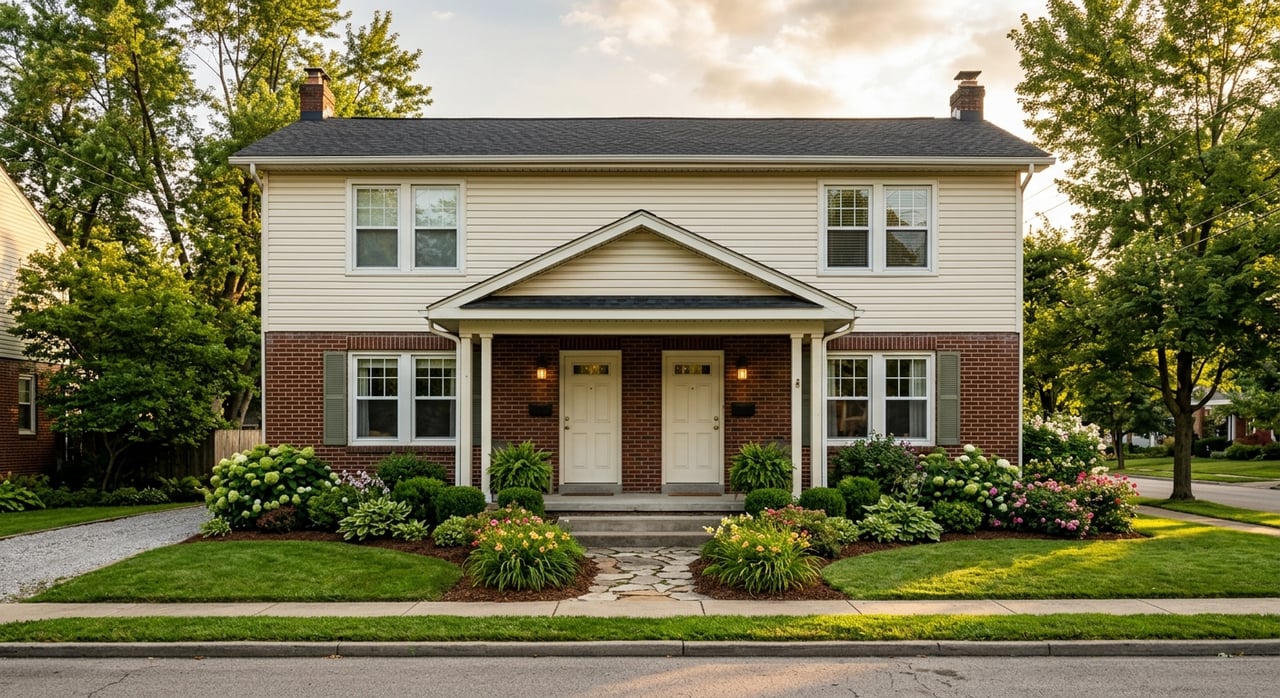
In Des Moines, small multifamily usually means a duplex, triplex, or fourplex. You may also see converted older homes with multiple units or small apartment buildings in older parts of the city.
A current listing sample in Des Moines showed 49 multifamily properties for sale, with asking prices ranging from $99,000 to $1,250,000. Based on that snapshot, many smaller duplexes and triplexes tend to fall in the low-$100,000s to mid-$300,000s, while larger or more renovated buildings often price much higher.
That range is important because it shows there is no single “normal” small multifamily deal. Your budget, renovation tolerance, and plan for owner-occupancy will shape what makes sense.
House Hacking Is Often the Best First Move
For many first-time multifamily buyers, the smartest path is simple: live in one unit and rent out the others. This approach is often called house hacking, and it can work especially well in a market like Des Moines where smaller multifamily properties still exist at relatively reachable price points.
HUD allows FHA-insured financing on owner-occupied principal residences, and at least one borrower must occupy the property within 60 days of signing. VA purchase loans can also be used for properties up to four units when the borrower occupies one unit as a primary residence. Freddie Mac and Fannie Mae also support owner-occupied 2- to 4-unit properties.
The appeal is straightforward. Instead of covering your full housing payment alone, you may be able to offset part of it with rent from the other units.
Can Rental Income Help You Qualify?
Often, yes. Freddie Mac says rental income from the other units in a 2- to 4-unit owner-occupied property can be added to the borrower’s income for housing-expense and debt-to-income calculations.
Fannie Mae’s DU guidance also includes rental income treatment for 2- to 4-unit primary residences. That does not mean every dollar of projected rent gets counted exactly the way you expect, but it does mean this income can be part of the financing conversation.
If you are exploring this route, one of the most important questions to ask early is how the lender will treat rent from the other units. That answer can shape your price range, cash needed, and monthly comfort level.
Des Moines Neighborhoods to Watch
Many of the city’s most relevant small multifamily opportunities show up in older, near-core neighborhoods. These areas often have housing stock from the late 1800s through the mid-1900s, which can create opportunity but also more condition-related homework.
Drake
Drake is one of the most visible small multifamily search areas in Des Moines. A recent neighborhood listing page showed 14 multifamily listings ranging from $99,000 to $775,000, with a median sale price of $196,500 and a median list price of $217,450.
Recent examples included a duplex or converted property with a renewed rental license and about $2,636 per month in gross rent, plus a four-unit property showing about $3,393 per month in gross rent. For buyers, Drake is a good example of a neighborhood where rental demand and older housing stock often meet.
Highland Park
Highland Park is another area worth watching. Its housing stock largely dates to the first half of the 1900s, and current multifamily listings were noted between $225,000 and $289,900, while the neighborhood median sale price was $165,000.
This can make Highland Park useful for buyers looking at older properties with value-add potential. It is the kind of area where the purchase price may look appealing, but the renovation budget still needs close attention.
Beaverdale
Beaverdale offers another version of the small multifamily story. The neighborhood is known for early- and mid-20th-century housing styles, and current duplex examples were shown around $235,000 and $380,000, with a neighborhood median sale price of $256,000.
For some buyers, Beaverdale may feel like a middle ground. It has older housing character, but multifamily pricing may be less entry-level than in some other areas.
Union Park
Union Park is another older neighborhood where small multifamily can show up in housing from the late 1800s and early 1900s. Recent multifamily listings ranged from about $275,000 to $335,000, while the neighborhood median sale price was $178,250.
This is a good reminder that the median home price in a neighborhood does not automatically match multifamily pricing. Small multifamily often carries a different value logic because of income potential.
River Bend
River Bend stands out for two reasons. First, it is part of an older area with a lower neighborhood median sale price of $157,000. Second, city materials identify River Bend as a local historic district.
That historic-district status matters if you plan to change the exterior. In Des Moines historic districts, exterior work may require a certificate of appropriateness before construction or alteration can move forward.
Sherman Hill
Sherman Hill helps show how quickly pricing can change based on size, renovation level, and location. One recently sold multifamily property at 754 19th St was built in 1885 and sold for $475,000 as a renovated 5-plex. Another multifamily page showed a Sherman Hill 4-plex at $264,900 and a larger 17-unit project at $2.15 million.
For a beginner, Sherman Hill is less about finding a standard price point and more about understanding how much historic character and renovation quality can influence value.
What Older Des Moines Properties Can Hide
Older multifamily buildings can create real opportunity, but they also demand careful due diligence. This is where experience with construction and property condition becomes especially valuable.
Lead Paint Risks
If a property was built before 1978, lead-based paint is a real concern. The EPA says homes built before 1978 are more likely to contain lead-based paint, and 87% of homes built before 1940 have some lead-based paint.
In Des Moines, that applies to a large share of the older duplexes and small apartment buildings you will tour. If updates are needed, you will want to plan for proper disclosures, lead-safe practices, and qualified contractors.
Water Service Lines
Lead concerns are not limited to paint. Des Moines Water Works says homes built before 1940 may be served by a lead water service line, and copper pipe installed before 1985 may have lead-containing solder.
For an older multifamily property, water-service verification is a smart part of due diligence. It is much better to learn this before closing than during a renovation or tenant turnover.
Deferred Maintenance
Listing examples in Des Moines show the details that often matter most in small multifamily deals:
- Roof age
- Plumbing updates
- Separate gas and electric meters
- Off-street parking
- Current rental license status
- Clear utility responsibility
These are not minor details. On a smaller property, one major repair or one poorly structured utility setup can change your cash flow quickly.
Local Rules Buyers Should Not Overlook
Des Moines has city-specific rules that can affect both timing and budget. These issues can surprise first-time buyers if they focus only on purchase price and rent.
Rental Inspection Certificates
The city states that all rental properties need a rental inspection certificate prior to occupancy. That means a small multifamily purchase is not just about collecting rent and making cosmetic improvements. There is an operational layer you need to budget for from day one.
The city’s rental license application also says that owners who live outside Polk County or a contiguous county must appoint a local management agent. On top of that, inspection and renewal costs should be treated as part of your ongoing operating expenses, not as a one-time paperwork item.
Historic District Approval
If you buy in a historic district such as River Bend, exterior work may require a certificate of appropriateness from the Historic Preservation Commission. That can affect project timing, scope, and renovation plans.
If your strategy depends on exterior changes, confirm the approval path before you assume the project is simple. Historic status can be manageable, but it should never be an afterthought.
How to Underwrite Conservatively
The best beginner move is to stay realistic. Des Moines has a citywide median gross rent of $1,090, but actual rent rolls on small multifamily properties vary a lot.
Recent examples in Drake showed gross monthly rents around $2,636 and $3,393 on different properties, while some smaller units were listed around the $500 to $800 range per unit. That spread is exactly why you should avoid broad assumptions.
When you analyze a property, make sure you account for:
- Vacancy
- Taxes
- Insurance
- Repairs and maintenance
- City inspection and licensing costs
- Utilities, if owner-paid
- Capital reserves for older-building surprises
In Des Moines, small multifamily often works best when you treat it as a house-hack plus value-add opportunity, not as an instant high-cash-flow shortcut.
A Smart First-Step Plan
If you are just getting started, keep your search focused and practical. You do not need the perfect building. You need a property that fits your financing, your repair tolerance, and your ability to manage risk.
A good starting framework looks like this:
- Decide if you are willing to live in one unit.
- Ask a lender how rental income may be counted for a 2- to 4-unit property.
- Focus your search on older Des Moines neighborhoods where small multifamily is common.
- Review age, roof, plumbing, meters, parking, and rental-license status carefully.
- Verify any historic-district rules before planning exterior changes.
- Budget for inspections, repairs, and reserves before you think about monthly profit.
That approach will not make every property pencil out, but it can help you avoid the mistakes that hurt first-time investors most.
If you want help sorting through neighborhoods, comparing small multifamily options, or evaluating a property with both market and condition in mind, the Mauro Team is here to help you make a confident next move.
FAQs
Can you buy a small multifamily property in Des Moines and live in one unit?
- Yes. FHA, VA, Freddie Mac, and Fannie Mae all have owner-occupied paths for 2- to 4-unit properties, subject to program rules.
Can rental income from other units help you qualify for a Des Moines multifamily purchase?
- Often, yes. Freddie Mac and Fannie Mae guidance both support using rent from other units in qualifying for certain owner-occupied 2- to 4-unit properties.
Which Des Moines neighborhoods are common starting points for small multifamily investing?
- Buyers often start in older, near-core areas such as Drake, Highland Park, Beaverdale, Union Park, River Bend, and Sherman Hill because that is where many smaller multifamily properties are located.
What local Des Moines rule surprises first-time multifamily buyers most?
- A common surprise is that rental properties need a rental inspection certificate prior to occupancy, and some properties may also face historic-district approval requirements for exterior work.
What should you check first on an older Des Moines duplex or fourplex?
- Focus on build year, roof, plumbing, separate utilities, rental-license status, possible lead-related issues, and whether any historic-district rules apply.